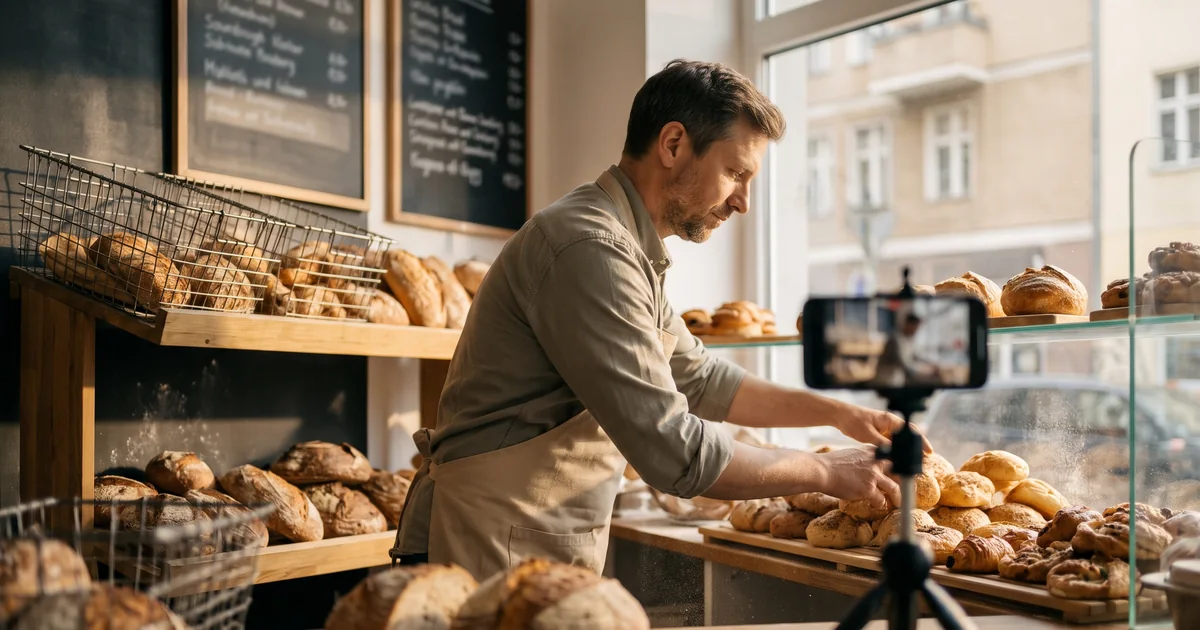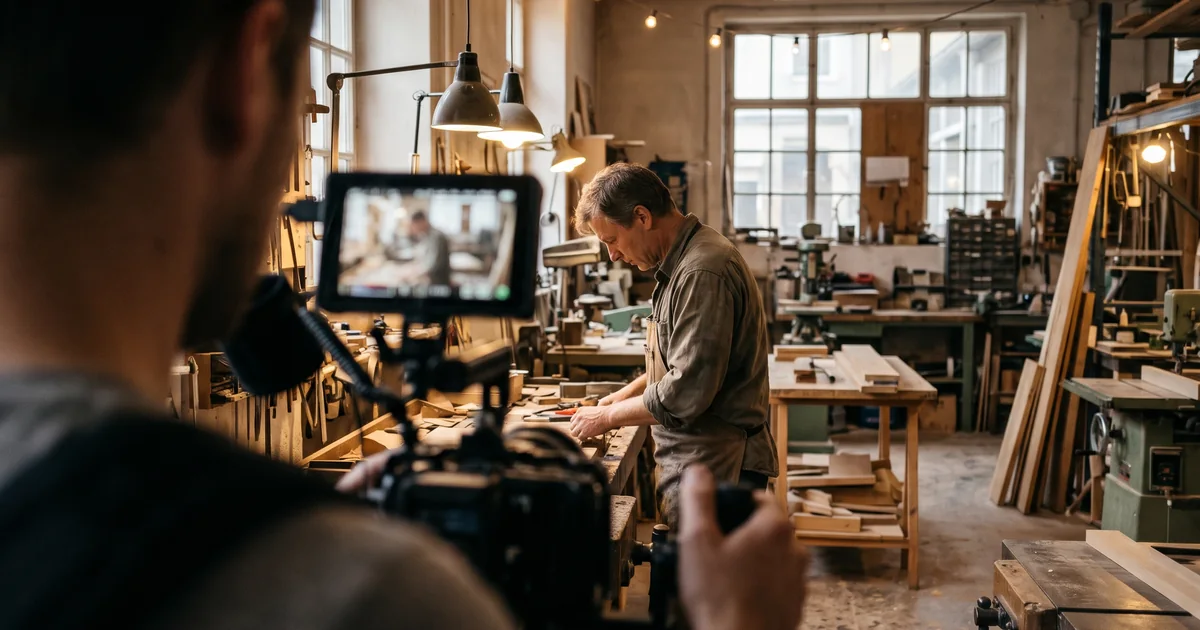

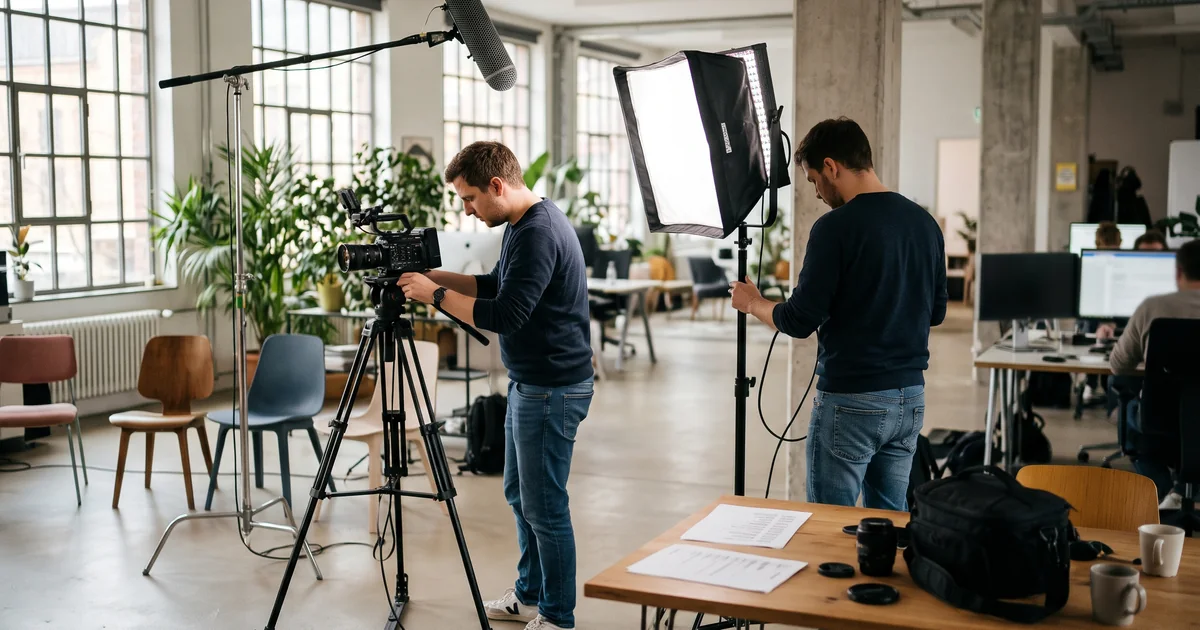
The best time to prepare a shoot day is two weeks in advance: approve the script and schedule, decide on people and rooms, collect consent and – if you're filming on public streets in Berlin – apply for a permit from the district office. In the week of the shoot it's about clothing, tidy rooms, quiet for interviews and one contact person on site. The better the preparation, the more material one day produces.
Below you'll find a timeline, the rules for filming permits in Berlin, a checklist and the most common mistakes.
Timeline: what to do when
| When | Task |
|---|---|
| 3–4 weeks before | Agree the brief, set the shoot date |
| 2–3 weeks before | Approve script, shot list and schedule; apply for a permit if needed |
| 2 weeks before | Decide who's on camera and inform them, send consent forms |
| 1 week before | Prepare rooms, products and props, inform colleagues and customers |
| 1–2 days before | Settle clothing, send the run sheet to everyone involved |
| Shoot day | Rooms tidy, contact person on site, breaks and food planned |
How to write the brief: our video production brief template.
Do I need a filming permit in Berlin?
Not on your own premises. If you film on public streets, pavements or squares and do more than an ordinary passer-by would, Berlin usually requires a special use permit from the responsible district office. According to the Berlin Brandenburg Film Commission (BBFC):
| Case | What's needed |
|---|---|
| Filming only on your own or private premises | No permit, but the owner's permission |
| Mini team: max. 5 people, max. one tripod, no lighting setup, no traffic measures | Simplified special use application to the district office, with a map extract |
| Larger shoot on public streets | Special use permit from the district office |
| No-stopping zone, road closure, traffic light changes | Additionally a traffic order and general filming permit (from €50 per day) |
The BBFC recommends applying at least two, ideally three weeks before the shoot. According to the BBFC, unauthorised special use can be fined up to €10,000. Current news reporting is exempt. This applies to Berlin; Brandenburg has its own rules.
Consent: who needs to agree?
Everyone recognisable in the video should give written consent beforehand – employees too. Record what the video will be used for and for how long (website, social media, ads). Customers or guests who happen to be in shot are informed beforehand or filmed so they can't be recognised. Music, third-party logos and artworks in shot are best avoided or cleared. This isn't legal advice; if unsure, ask a specialist lawyer.
Clothing: what should people wear?
| Good | Better to avoid |
|---|---|
| Plain, muted colours | Fine stripes and small checks (they flicker on camera) |
| Company clothing, if you have it | Big third-party logos |
| Ironed clothes, a second outfit to hand | Pure white or pure black in bright light |
| Comfortable shoes | Jangling jewellery (it ruins the sound) |
Preparing rooms and sound
- Tidy workstations, counters and shelves; remove cables and personal items.
- Close screens showing sensitive data.
- Book a quiet room for interviews, switch off air conditioning and music.
- Inform colleagues, customers and neighbours.
- Lay out the products, tools and props to be shown.
Shoot day checklist
- Script, shot list and schedule are approved.
- A filming permit is in place (if filming in public space).
- Everyone on camera is informed and has consented.
- Clothing is agreed, a second outfit is ready.
- Rooms are tidy, no sensitive data in shot.
- A quiet room for interviews is booked.
- Power, parking and access for the crew are sorted.
- One contact person is available all day.
- Breaks and food are planned.
- Everyone knows when they're needed (run sheet sent).
Common mistakes
- Packing too much into one day. Fewer scenes, done well, is better.
- Asking people on the morning. People caught by surprise look unsure on camera.
- Business as usual without warning. Customers and colleagues are confused, and the sound becomes unusable.
- Forgetting the permit. A street location without permission can get expensive.
- No vertical format planned. If you want social media content, shoot vertical from the start. More in One shoot day, a month of content.
For clips between shoot days, see our 12 smartphone video tips.
How we work at Digimark
Digimark is an agency for video, social media and ads at District One in Berlin-Schöneberg. We work in German, English and Turkish.
- Preparation: we send you the script, shot list and a timed run sheet.
- Permits: if we film in public space, we handle the application.
- Shoot day: usually five to ten hours on location, with a small crew so your business can keep running.
- Editing: the first videos are usually ready one to two working days after the shoot.
More about our video and photo production.
Next step: Planning a shoot day? Book a free strategy call
Frequently asked questions
How do I prepare for a shoot day?
About two weeks before, approve the script and schedule, decide on people and rooms, collect consent and apply for a filming permit if needed. In the week of the shoot, agree clothing, tidy the rooms and book a quiet room for interviews.
Do I need a filming permit in Berlin?
Not on your own premises. Filming on public streets, pavements and squares usually requires a special use permit from the responsible district office. There's a simplified procedure for mini teams.
How far ahead should I apply for a filming permit in Berlin?
The Berlin Brandenburg Film Commission recommends at least two, ideally three weeks before the shoot.
What should I wear for a video shoot?
Plain, muted colours and a second outfit. Avoid fine stripes, small checks, big third-party logos and jangling jewellery.
Do employees need to consent to being filmed?
Yes, everyone recognisable should give written consent beforehand, including employees. It should state what the video will be used for and for how long.
How long does a shoot day take?
At Digimark usually five to ten hours on location, depending on the number of scenes and locations.